
Generative Engine Optimisation
(GEO) Services

  • Quickly  improve how AI systems understand, trust and recommend your brand.
  • Get highly qualified visitors to your website (research shows visitors 4x more likely to convert).

Get Recommended in AI-Powered Search Now

The Platforms Our GEO Service Optimises For

The Future of Search Behaviour Has Shifted.
Our GEO Services Put Your Brand Inside AI Answers.

Search is no longer just
“10 blue links”.

AI systems now summarise information, choose trusted sources, and generate answers directly on the results page.

If your brand isn’t part of the answer, you’re invisible.

GEO (Generative Engine Optimisation) ensures AI systems: understand who you are,

trust your authority, and choose to reference you inside their generated answers.

This includes:

  • AI Overviews in Google Search
  • Gemini AI Mode
  • ChatGPT’s search-enhanced responses
  • Perplexity citations and summary cards
  • Claude’s data-backed insights

GEO strengthens the exact signals AI systems rely on:
entity clarity, content relevance, authority, freshness
and link reputation.

Hundreds of Happy Clients

Our GEO Services
Support

In-House SEO Teams

Brands with strong SEO foundations who need AI-driven visibility beyond rankings.

SEO Agencies

(White-Label GEO)

Agencies needing reliable, high-quality GEO delivery for multiple clients with full white-label reporting.

Digital Marketing Managers

Teams looking to future-proof their search visibility and improve brand trust signals.

Brands Publishing at Scale

SaaS, finance, e-commerce, B2B, healthcare and travel brands who rely heavily on organic traffic and topical authority.

UK Linkology's Leading
GEO Service Delivers

AI Answer Share

Own the conversation in your sector. When prospects ask AI tools about solutions in your field, your business appears in the generated responses. Instead of competing for declining Google clicks, you become the cited expert that AI systems recommend first.

Measurable ROI

Each AI citation reinforces UK Linkology's client as a trusted entity. As citations accumulate across publications, AI systems encounter the brand more frequently in training-adjacent data, increasing the probability of future recommendations. Clients on the Dominate plan target visibility across four topic categories simultaneously to accelerate this compounding effect.

Qualified Visitors

Traffic that converts. AI-driven visitors arrive pre-educated about your expertise, having already seen you recommended by their trusted AI assistant. They're not window shopping, they're ready to engage with the authority figure AI pointed them towards.

GEO Service Pricing Plans

Prices are per month. Minimum 3 month engagement.

AI service features:

  • AuditPrompt targeting (query fans)
  • Site targeting list (guest post)+ Link insert opportunity list
  • AI optimised off-page content plan
  • Client page optimisation for AI
  • Digital PR plan and execution (B & C only)
  • Topical link acquisition
  • Reddit threads
  • Tracking
A. Start
  • Visibility in 1 x topic/category
£4950
B. Grow
  • Visibility in 2 x topics/categories
£9450
C. Dominate
  • Visibility in 4 x topics/categories
£19950

Recent GEO Success Stories

UK Linkology GEO clients have been cited in ChatGPT responses for technology product queries, in Google AI Overviews for healthcare information searches, and in Perplexity summary cards.
Specific campaign metrics are available on request

Here’s what happens when you get GEO right:

UK Linkology GEO Service Process

Our GEO framework which combines entity optimisation, semantic content, authority-building PR, high-quality link acquisition and technical refinement. Every element is designed to strengthen the signals AI systems use to choose trusted sources.

Every element is designed to strengthen the signals AI systems
use to choose trusted sources.

AI Visibility Audit
(Starting Point)

Before any optimisation begins, we run a full AI Visibility Audit

This identifies:

  • Your current visibility in Google AI Overviews
  • Whether Gemini, ChatGPT, Perplexity or Claude cite your brand
  • Entity consistency across the web
  • Conflicting or diluted information
  • Technical factors that limit AI understanding
  • Semantic gaps in your content
  • Authority signals and PR coverage gaps
  • Link profile quality, risk and relevance

We Get Your Content Ready
For a World Where Searchers
Are Using AI By Default

Entity Building &
Knowledge Clarity

AI systems rely heavily on entities — not just keywords. If your brand isn’t a clearly defined entity, AI won’t trust or recommend it.

We strengthen all core entities:

  • Your brand
  • Founders and leadership
  • Products and services
  • Locations
  • Related concepts and topics

Semantic Content
for AI Answers

Semantic Content for AI Answers. AI selects brands based on topic understanding and semantic relevance. Your content must match how AI interprets meaning, not how humans skim pages.

We develop:

  • Answer-first content (clear, factual, concise)
  • Citable blocks that AI can easily extract
  • Topic clusters built for AI interpretation
  • Semantic coverage of important subjects
  • Clarified definitions for key concepts
  • Structured data to support meaning
  • NLP-aligned expansions that deepen topical authority

We Build External Authority Using Signals
that AI Rewards with Visibility

Links & Mentions
Through Digital PR

Authority remains one of the strongest signals for both Google and generative AI.

But not all PR is useful for AI systems.We focus on FAR: Freshness, Authority, Relevance

Freshness

AI systems reward recent information. We secure fresh coverage and ensure updated facts exist across authoritative sites.

Authority

We target trusted publications that AI considers reliable sources.

Relevance

We only pursue topically aligned placements.
Irrelevant mentions weaken your signals in both SEO and AI

High-Relevance Link
Acquisition Using M-Flux

M-Flux is UK Linkology's proprietary site-selection model for GEO link acquisition.

It applies 33 manual checks across seven dimensions: relevance, authority, semantic alignment, traffic patterns, editorial quality, link neighbourhood safety, and risk indicators.

  • Relevance
  • Authority
  • Semantic alignment
  • Traffic patterns
  • Editorial quality
  • Link neighbourhood safety
  • Risk indicators

Why this matters for GEO:

  • AI systems pay attention to:
  • Who cites you
  • What context you’re cited in
  • Whether links support topical authority
  • Whether citations are trustworthy
  • How frequently your brand appears in respected publications

We Set Up your Site to be GEO Friendly.
Critical For Success in LLMs Like Perplexity, ChatGPT, Claude and Gemini

Technical GEO

AI models need a clean, structured, consistent dataset to work from.

Clean technical signals help AI decide:

  • Whether your site is correct
  • Whether it’s trustworthy
  • Whether it belongs in the answer

Technical GEO includes:

  • Schema optimisation
  • Internal linking for semantic clarity
  • URL structure
  • Crawlability and indexation
  • Page speed and UX signals
  • Duplicate content removal
  • Orphaned content repair
  • Consistent terminology across pages
  • Fact-block creation
  • Canonicalisation
  • Accessibility improvements

Industry Categories 

We're Succeeding In

Finance

Retail

Techology

Property

iGaming

Vaping

Education

Automotive

Sports

Travel

Sectors We've Succeeded In

Finance

Retail

Techology

Property

iGaming

Vaping

Education

Automotive

Sports

Travel

FAQs

Your biggest questions about GEO strategy, answered without the fluff.

Generative Engine Optimisation (GEO) is the practice of optimising a brand so it is referenced, cited, or recommended inside AI-generated answers produced by systems such as ChatGPT, Google Gemini, Perplexity, and Claude. Unlike traditional SEO, which targets keyword rankings in a list of links, GEO targets entity trust and topical authority signals that determine whether an AI system selects a brand as a source when generating a response.

Traditional SEO is primarily about crawling and indexing, keyword rankings, and traffic acquisition via clicks.

GEO extends this by focusing on whether AI systems trust your brand as an entity, whether your content can be reused as an answer, and whether your brand is co-mentioned alongside trusted sources.

SEO helps you get found in a list of links.
GEO helps you get chosen and referenced in answers.

In practice, strong GEO improves SEO, but not all SEO work improves GEO.

These terms are often confused, so clarity matters.

SEO (Search Engine Optimisation) is about optimising pages to rank in traditional search results.

GEO (Generative Engine Optimisation) is a specific discipline focused on how large language models select sources, entities, and citations when generating answers.

GEO is not a rebrand of SEO. It addresses a different retrieval and decision layer.

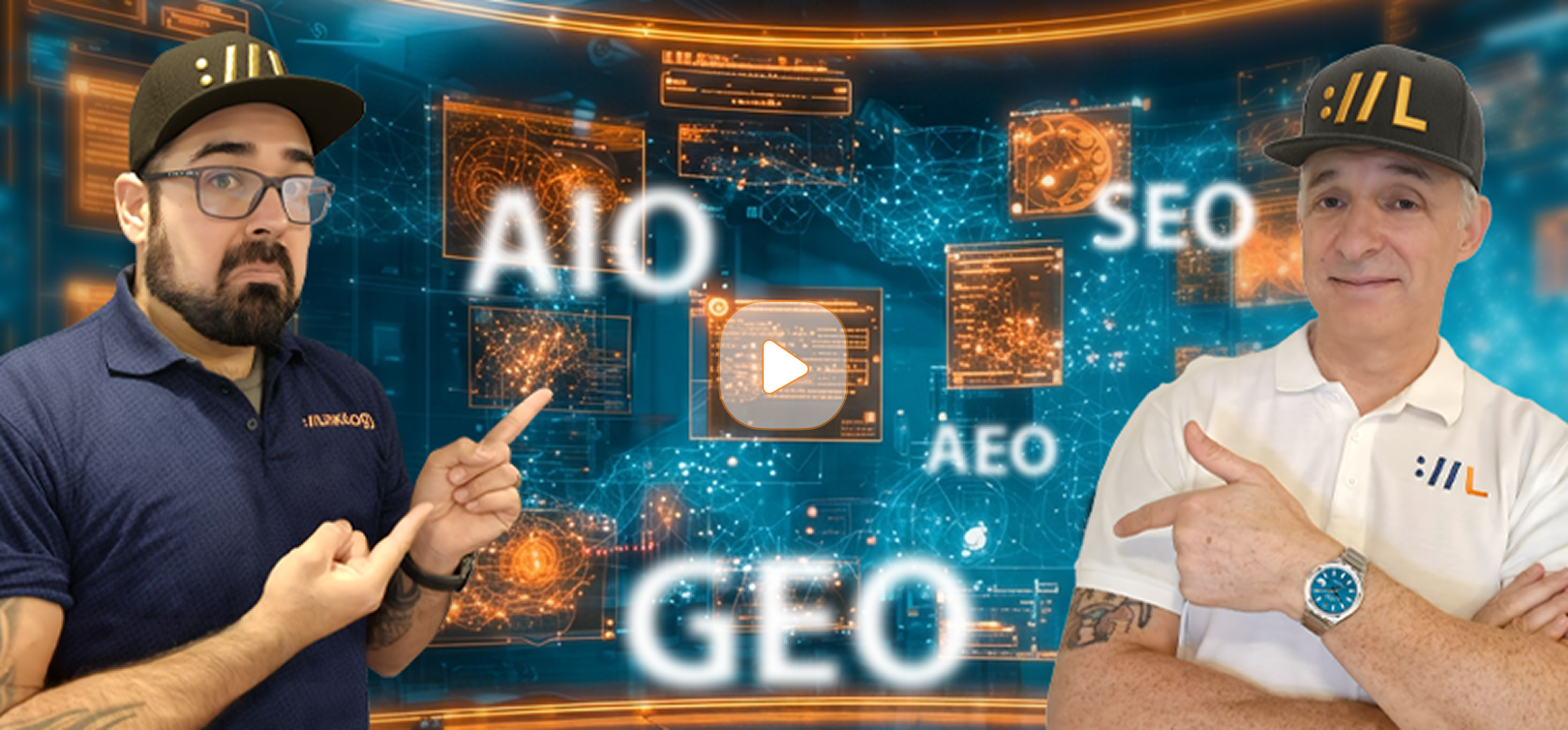
AI SEO, AEO, and GEO are often used interchangeably, and there is no fixed industry standard for their definitions.

In general:

  • AI SEO is a broad term for optimising visibility in AI-influenced search.

  • AEO usually focuses on structuring content so it can be selected as a direct answer.

  • GEO is commonly used to describe optimisation for systems that generate answers using multiple sources.

We use GEO because it best reflects how modern search works today: answers are generated, entity trust matters, and off-page signals influence visibility. The label matters less than the goal, which is to make your brand clear, trusted, and reusable by AI systems.

No.

If GEO were just SEO, brands with high rankings would always appear in AI answers and AI results would closely mirror traditional SERPs.

In reality, AI engines frequently cite lower-ranking but more trusted or more topically aligned sources.

Entity reputation and off-page context matter more than position alone.

GEO requires additional signals that traditional SEO does not prioritise.

Links matter differently in GEO.

They are not just authority votes or ranking signals.

They also act as entity validation signals, evidence of topical association, and co-citation signals used by LLMs.

A relevant editorial link on the right site often matters more than multiple generic links.

Yes. Digital PR is one of the strongest GEO levers when done correctly.

It contributes brand mentions on trusted publications, expert commentary tied to real entities, and co-occurrence with authoritative brands and topics.

LLMs disproportionately rely on these signals when deciding what to reference.

Brand mentions can still be valuable without a link when they appear in the right context.

Search engines and AI systems analyse keyword co-occurrence and entity relationships, not just hyperlinks. When a brand is mentioned near keywords that match the intent of a page, and alongside related entities, it helps reinforce what that brand is associated with.

Consistent mentions in relevant contexts strengthen semantic understanding and entity trust. Links still matter, but contextual mentions help search engines and LLMs understand relevance, which is increasingly important in AI-generated results.

This is why modern authority building focuses on where and how a brand is mentioned, not just whether it is linked.

There is no direct way to optimise a single model.

GEO focuses on the training-adjacent signals LLMs rely on, publicly visible trust indicators, and repeated, consistent validation across the open web.

You optimise the inputs models learn from and cite, not the model itself.

Reddit is important for GEO because it is both highly trusted and heavily referenced by AI systems.

LLMs frequently surface Reddit threads to understand real user language, product comparisons, and problem-solution discussions. When a brand is mentioned naturally in relevant subreddits, alongside keywords and entities that match buyer intent, it strengthens topical and entity associations.

Well-ranked Reddit threads often appear directly in search results and are reused in AI-generated answers. This makes Reddit a valuable channel for reinforcing context, credibility, and discoverability in both traditional search and generative AI experiences.

Yes.

Commercial URLs are mapped into topical clusters, with supporting content and off-page placements aligned back to revenue pages.

The goal is not just traffic volume, but also qualified visibility and assisted conversions, including influencing decisions earlier in the buying journey.

They are complementary.

Technical SEO ensures content can be crawled, indexed, and understood.

GEO ensures your brand is trusted enough to be referenced, your content is clear enough to be reused, and your entity relationships are reinforced off-page.

Without technical SEO, GEO underperforms.
Without GEO, technical SEO caps out.

While models are not transparent, consistent patterns include repeated brand mentions across trusted sites, association with recognised experts or publications, clear topical focus and semantic consistency, natural language explanations rather than keyword-stuffed copy, and evidence of real-world authority.

This closely mirrors how humans assess credibility.

Not with a single metric, but it is observable.

Proxy indicators include inclusion in AI answers where visibility can be tested, growth in branded and non-brand demand, topic-level ranking improvements, referral quality and assisted conversions, and increased citation-style mentions across the web.

GEO is cumulative, not instant.

You should expect early signals in weeks from link and mention impact, clearer movement in one to three months, and compounding effects over three to six months.

Like authority itself, GEO rewards consistency over shortcuts.

Yes, when done properly.

The approach avoids automation abuse, manipulative tactics, and short-term exploitation of AI quirks (“poisioning” LLMs with fake content).

The focus is on sustainable authority building, aligned with how both search engines and AI systems evaluate trust.

GEO is a strong fit if you already invest in content and SEO, compete in crowded or high-value SERPs, operate in markets where brand trust influences buying decisions, and want visibility beyond clicks alone.

It is particularly effective for SaaS, finance, travel, e-commerce, B2B, and regulated sectors.

UK Linkology offers white-label GEO delivery for agencies.

Under the white-label arrangement, agencies receive client-ready monthly reports, unbranded deliverable documentation, and a dedicated account manager.

The service runs alongside existing SEO retainers without requiring agencies to restructure their current client relationships.

You can, but your competitors probably might not.

As AI answers replace clicks for many queries, visibility shifts from ranking to being referenced.

Brands that invest early will compound trust faster.

GEO is not about chasing trends. It is about adapting to how discovery already works.

Meet Our Expert GEO Delivery Team

Success depends on the team behind it, and UK Linkology have some of the brightest experts around.

Jason Brooks

Danny Andrews

George Blandford
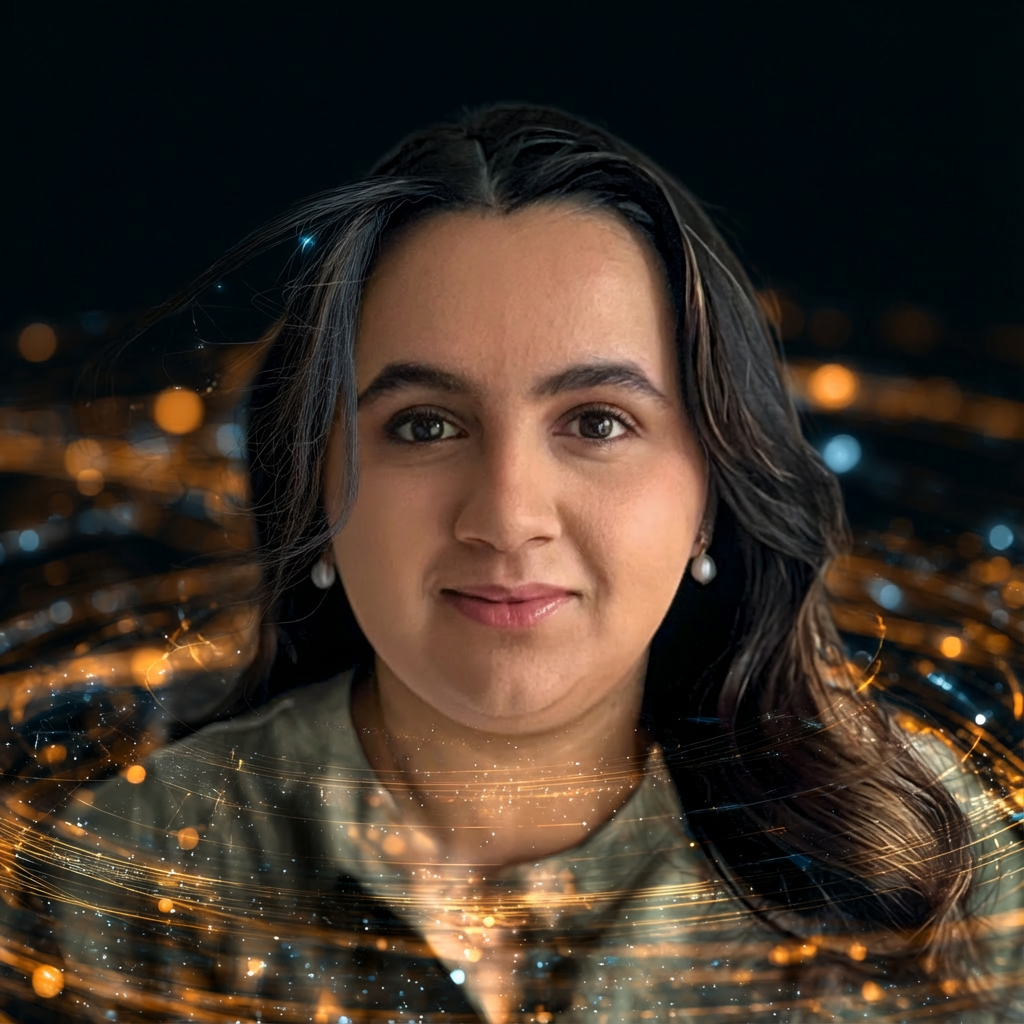
Yasmin Parveen

Cody Gales

Dan Annetts

Jason Brooks

Yasmin Parveen