Google Just Killed Your Anchor Text Strategy
I’ve spent 14 years watching SEO professionals obsess over anchor text ratios. They’re still debating exact match versus partial match percentages, while Google’s AI has moved so far beyond these outdated metrics that it’s almost laughable.
Let me be direct – anchor text optimisation as we knew it was dead. The recent Google leaks in May 2024 finally confirmed what I’ve been telling clients for years: the text surrounding your links matters far more than the anchor text itself.
The Shift to Context: What Is “Context2”
Google’s now looking at what they call “context2” – the terms near your anchor text.
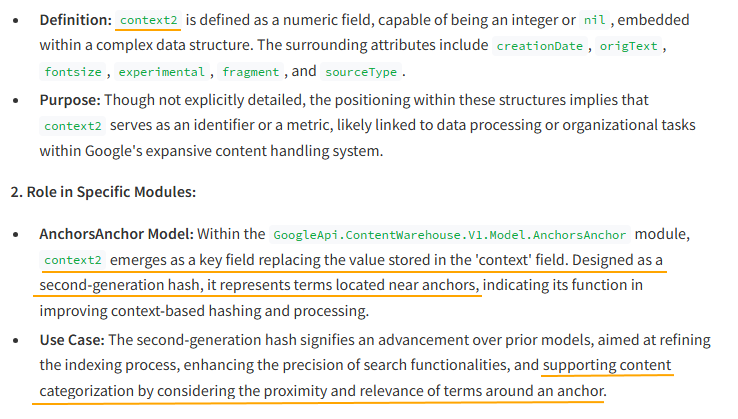
They’re analysing “fullLeftContext” and “fullRightContext” – the complete textual environment around your links.
Yet most SEO professionals are still stuck in 2012, treating anchor text like it’s some magical ranking signal.
It’s not.
Why Exact-Match Anchor Text No Longer Works
Think about it logically. With the rise of AI and natural language processing, why would Google still rely heavily on exact-match anchor text? They can understand the context now. They can process language and intent. The obsession with perfect anchor text ratios isn’t just outdated – it’s potentially harmful to your SEO efforts.
When the Google Penguin algorithm first rolled out, everyone panicked about overoptimised anchors. But Google couldn’t fully deliver on its promises back then. The technology wasn’t there yet. Now it is. And it’s not just about avoiding penalties anymore; it’s about understanding how modern search engines actually work.
Contextual Relevance: What Really Matters
The match between your content, your anchor text, and your linked page needs to make sense for users. If you’re writing about hand-carved wooden bowls, and you naturally link to a page about carving tools using the anchor “best hand wood carving tools” – that’s fine. The key is the context.
Let me give you a concrete example. Imagine a paragraph discussing the history of wooden bowl carving that links to a page selling carving tools. Even with perfect anchor text, that’s a contextual mismatch. Google sees that now. Their AI understands when the surrounding content doesn’t align with the linked page’s purpose.
I’ve watched this industry evolve for over two decades. I’ve seen countless SEO myths come and go. But this obsession with anchor text optimisation might be the most persistent, and now the most pointless.
The Age of Context: A New Approach to Link Building
We need to stop treating anchor text like it’s 2012.
Stop wasting time calculating perfect ratios.
Stop forcing exact-match keywords where they don’t naturally fit.
Start focusing on creating genuinely useful content with contextually relevant links.
The future of link building isn’t about manipulating anchor text, it’s about understanding how AI processes language and context.
It’s about creating content that serves users first, with links that make sense in their natural environment.
And if you’re still not convinced, look at the data. The Google leaks confirmed three specific attributes they’re analyzing: context2, fullLeftContext, and fullRightContext.
The sooner we all accept this reality, the better our SEO strategies will become.
The era of obsessing over anchor text is over. The age of context has begun.