
Building a robust online presence goes beyond having a well-designed website or an engaging social media strategy. At the heart of digital success lies a powerful yet often overlooked component: link building. But how do you plan a successful link building campaign? Our comprehensive guide will walk you through the process, from understanding the importance of link building and setting your campaign goals to crafting high-quality content and identifying link opportunities. Whether you’re new to link building or looking to refine your strategy, this guide will equip you with the knowledge and tools you need to plan and execute a successful link building campaign.
What is a Link Building Campaign?
A link building campaign is a strategic initiative designed to increase the number of high-quality inbound links pointing to your website. This crucial aspect of search engine optimisation (SEO) not only enhances your website’s visibility and search engine rankings, but also fosters relationships with non-competitive companies and boosts organic traffic. In the following sections, we’ll delve into why link building campaigns are important and how they can help achieve your business goals.
Why Are Link Building Campaigns Important?
The importance of link building campaigns extends beyond just improving website visibility and search engine rankings. Here’s a more detailed look at what they can do for your business:
- Improve Website Visibility and Search Engine Rankings: Link building is a key SEO strategy. By acquiring high-quality inbound links, you signal to search engines like Google that your website is a credible and authoritative resource. This can significantly boost your site’s ranking in search engine results, leading to increased visibility and organic traffic.
- Enhance Brand Awareness: A well-planned link building strategy also plays a crucial role in enhancing brand awareness. When your content is linked to by other reputable websites, it reaches a wider audience, thereby increasing the recognition and credibility of your brand.
- Establish Relationships: Link building is about more than just links – it’s also about building relationships. When you get started with link building, you often collaborate with non-competitive companies and influencers in your industry. These collaborations can lead to long-term partnerships, further link opportunities, and increased organic traffic to your site as your content reaches a wider audience through your partners’ platforms.
- Achieve Your Business Goals: Link building strategies can help achieve business goals, including increasing website traffic, boosting conversions, generating leads, enhancing customer engagement, and more. The specific goals that you’re able to achieve will depend on your business’s unique needs and objectives.
In essence, link building is a multifaceted strategy that can help your organisation on several levels, from meeting your business objectives to building a stronger online presence.
Setting Goals for Your Campaign
Before you dive into the nitty-gritty of link building, you need to set clear, measurable goals for your campaign. These goals will guide your strategy and help you measure your success. Are you looking to improve your search engine rankings? Increase website traffic? Enhance brand awareness? Foster industry relationships? Identifying what you want to achieve from the start will allow you to tailor your link building campaign to meet these specific objectives.
Establishing KPIs
Key Performance Indicators (KPIs) are an essential component of any link building campaign. They serve as measurable values that demonstrate the effectiveness of your campaign in achieving its primary objectives.
The importance of establishing KPIs in a link building campaign lies in their ability to measure success. They provide a clear, quantifiable measure of progress, allowing you to assess whether your campaign is on track to achieve its goals. When you track KPIs, you can identify what’s working, what’s not, and where adjustments need to be made to improve the campaign’s effectiveness.
Selecting relevant KPIs is a critical step in this process. Your KPIs should align directly with the goals and objectives of your link building campaign. For instance, if your goal is to improve search engine rankings, a relevant KPI might be the change in your website’s ranking for specific keywords. If your objective is to increase website traffic, you might measure the number of new visitors to your site or the number of clicks on your backlinks.
In essence, KPIs provide a way to measure the success and effectiveness of your link building campaign, guiding your strategy and helping ensure you’re on the path to achieving your goals and objectives.
Determining Your Audience and Ideal Links
Understanding your target audience and identifying ideal links are critical steps in planning a successful link building campaign in 2024.
Your target audience has a direct impact on the effectiveness of your campaign. When you understand who your audience is, what they’re interested in, and where they spend their time online, you can tailor your link building efforts to align with their preferences and behaviours. This increases the likelihood that your content will resonate with them and that they’ll click on your links.
Creating a target audience profile is a key part of this process. You’ll need to research and compile data on your audience’s demographics, interests, online behaviour, and preferences. Tools like Google Analytics, social media analytics, and customer surveys can provide valuable insights.
It’s equally important to identify ideal links. This involves researching your competitors’ backlink strategies to find potential link opportunities. Here’s how you can do this:
- Identify Your Competitors: Start by identifying who your main online competitors are. These could be businesses that offer similar products or services, rank highly for your target keywords, or have a strong online presence in your industry.
- Analyse Their Backlink Profiles: Use tools like Ahrefs or Semrush to analyse your competitors’ backlink profiles. Look at who is linking to them, what content is being linked to, and how those links are distributed.
- Find Link Opportunities: From your analysis, identify potential link opportunities. These could be websites that link to multiple competitors, industry blogs, or sites where your competitors have guest posted.
Defining your target audience and identifying ideal links can help you ensure your link building campaign is targeted, relevant, and effective.
Researching and Analysing Competitors’ Strategies
Learning from competitors is a crucial aspect of planning a successful link building campaign. When you research and analyse competitors’ strategies, you can gain valuable insights that can inform your own approach.
One effective way to learn from competitors is by examining their backlink profiles. Tools like Ahrefs can provide a wealth of information about where your competitors are getting their backlinks. This includes the websites that link to them, the specific pages being linked to, and the anchor text used in those links. Once you analyse this information, you can identify potential link opportunities for your own campaign.
But backlink profiles are just the start. You can also use Ahrefs to analyse your competitors’ top pages, links, and posts. This can provide insights into their content strategy, including what types of content attract the most links and what topics they’re focusing on. Additionally, you can see the keywords they’re targeting, which can help inform your own keyword strategy.
In essence, researching and analysing your competitors’ strategies can provide valuable insights that can help shape your own link building campaign. When you understand their backlink profiles, content strategy, and targeted keywords, you can develop a more effective and targeted approach to link building.
What A Simple Link Building Plan Looks Like
Would you like to dive into link building and explore all the benefits such a strategy can bring your business? We created a simple link building plan that can be broken down into a six-month timeline:
Month 1:
When you’re getting started with your link building efforts, the first month should be spent planning. Start by setting your goals and establishing KPIs. Identify your target audience and ideal links. Begin researching your competitors’ strategies and backlink profiles. You should also clarify what kind of links you’d like to build.
Month 2:
Based on your research, start identifying potential link opportunities. This could include websites that link to your competitors, industry blogs, or sites where your competitors have guest posted. Look for sites that your target audience enjoys interacting with. It’s also a good time to audit any backlinks and content that you already have. All these steps could help you to make your strategy more powerful.
Month 3:
Start creating high-quality content that’s tailored to your target audience and optimised for search engines. This could include blog posts, infographics, videos, or any other type of content that your audience finds valuable. The content should answer some of the questions your target audience has or offer a solution to their problem. When you’re writing guest blog posts, remember to tailor them to the website where they’ll be published to make the content look natural.
Month 4:
Begin reaching out to these potential link opportunities. This could involve sending personalised emails, engaging with them on social media, or even meeting them in person at industry events. Avoid sending generic messages. Personalised emails and messages will be more likely to get a response and allow you to build strong relationships that could make a significant difference to your campaign and final results.
Month 5:
Continue creating content and begin promoting it. This could involve sharing it on social media, sending it to your email list, or even running paid advertising campaigns. Share the content on all the platforms where you’re active. Adjust your caption to each platform individually, as there might be slightly different needs you need to target and formats you should use. Once you start to see engagement from your followers, make sure that you engage with them and show them that you appreciate the support. That might encourage them to share your content and help your backlink profile to become stronger.
Month 6:
Review your KPIs and assess the success of your campaign. Make any necessary adjustments to your strategy based on your results. It’s important that you watch your metrics and results constantly. That can help you to see what’s working and spot potential opportunities for improvement.
It’s important to remember that this is just a basic outline. Your link building plan may look different depending on your specific goals, resources, and timeline, but this approach should help you to start building your own process.
A tip from our Account Director Rachel:
“One of the most crucial elements to decide on is the target page (or pages) that you want to push links to. Consider asking yourself:
- Is it a page that will bring you value, whether that be traffic, sales or subscriptions?
- Has that page been well-optimised so that it stands a chance of competing?
Links are only one part of the puzzle. If the page being linked to isn’t worthy of page one rankings, it’s not going to get above your competitors. If you aren’t sure on what page to focus on, use tools like Ahrefs to conduct competitor research. Take a look at their top-performing pages and analyse the keywords they’re ranking for.
A couple of key metrics to assess here are the Keyword Difficulty rating and Search Volume, which will give you an idea of how valuable and competitive the terms are. If you can see a competing page ranking for a wide range of strong and relevant terms, you’ve struck gold. When bolstering your own page, try to include compelling content on there that will give people a reason to want to link out to you.”
Creating Content for Your Campaign
Content is the cornerstone of any link building campaign. The quality and relevance of your content can significantly impact the success of your efforts. Let’s delve into how to develop and craft high-quality content for your campaign.
Developing Relevant Content Ideas
Coming up with relevant content ideas is the first step in creating content for your link building campaign. Here are a few methods you can use:
- Brainstorming Related Topics: Start by brainstorming topics that are related to your industry and of interest to your target audience. This could involve creating a mind map of potential topics or holding a brainstorming session with your team. The goal is to generate a wide range of ideas that you can then refine and develop into content.
- Conducting Keyword Research: Use tools like Google Keyword Planner or Semrush to identify popular keywords in your industry. You can then create content around these keywords. Remember, the goal isn’t just to find popular keywords but also to identify keywords that your target audience is likely to use when searching for information.
- Utilising Tools Like Google Trends or BuzzSumo: These tools can provide insights into trending topics or popular content in your industry, which can inspire your own content ideas. For example, Google Trends can show you what topics are currently popular in your industry, while BuzzSumo can show you what content is getting the most shares on social media.
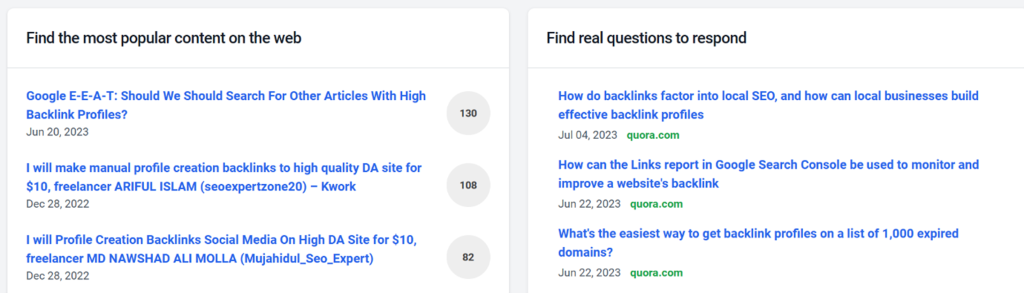
Developing relevant content ideas is a creative process that requires understanding your audience, staying updated with industry trends, and leveraging the right tools. Once you’ve done all of this, you should generate content ideas that resonate with your audience and align with your link building objectives.
Crafting High-Quality Content Pieces
Now you have your content ideas, it’s time to start creating. But where should you begin? Content creation is a complex process, and it might seem incredibly challenging in the early stages. However, we can help you create content your audience will want to interact with. Here are a few tips for crafting high-quality content pieces:
- Identify the Best Content Ideas: Not all content ideas are the right ones. Identify the ideas that are the best fit for your target audience and goals. To get a more in-depth insight, you could conduct market research to understand what information your audience is looking for or analyse your competitors’ content to see what topics they’re covering.
- Provide Valuable Information: Your content should provide valuable information that answers questions or solves problems for your audience. This might involve conducting in-depth research to provide comprehensive answers or including expert quotes or case studies to provide additional insights.
- Focus on Readability and Structure: Make sure your content is easy to read and well-structured. Use short paragraphs and bullet points to make your articles more digestible, or use subheadings to break up your content and make it easier to scan. That will help your audience to understand what each piece is about and allow them to find the information they need more easily.
- Incorporate Visual Elements: Consider incorporating visual elements like images, infographics, or videos to make your content more engaging and shareable. You could create custom graphics or use stock images that are relevant to your content. If you’re describing a specific online tool or software, you could even include a screenshot.
Crafting high-quality content is an art that combines relevance, value, and readability. The aim is to create content that not only attracts links, but also engages your audience and establishes your brand as a thought leader in your industry.
Optimising Content for Search Engines (SEO)
After you’ve created your high-quality content, the next step is to optimise it for search engines. Here’s how:
- Incorporate Relevant Keywords: Include the keywords you identified during your keyword research in your content. However, avoid keyword stuffing – the inclusion of keywords should feel natural and relevant to the content.
- Use Meta Tags and Header Tags: Meta tags (like title tags and meta descriptions) and header tags (H1, H2, etc.) help search engines understand what your content is about. Make sure to include your keywords in these tags.
- Link to Authoritative Websites: Adding outbound links to authoritative websites can help improve your content’s SEO. It provides additional value to your readers and signals to search engines that your content is well-researched and reliable.
- Secure Links from Authoritative Websites: Inbound links from authoritative websites can significantly boost your SEO. These links signal to search engines that your content is valuable and trustworthy.
Optimising your content for search engines is a crucial step in your link building campaign. It’s about making your content easily discoverable and ensuring it’s valuable enough to earn high-quality backlinks.
A tip from our content expert Hannah Stevenson:
“When you’re optimising for search, the key is to think like a reader. Google’s algorithms are looking for relevant, expert content that benefits readers, so in general, as long as you focus on the reader, you’ll be hitting the criteria that Google is searching for. So, put the reader at the forefront of your mind, and you can’t go far wrong.”
Promoting Content Through Social Media
Writing high-quality content isn’t enough if no one reads it: so when the piece is live, you need to share it far and wide. Promoting your content through social media is a great way to increase its visibility and attract more links. Here’s how you can do it:
- Be Active on Social Media: Regularly post updates and engage with your audience on social media platforms where your target audience is active. Each platform has its own best practices, so be sure to tailor your approach accordingly. For example, on Instagram, high-quality images, videos and hashtags are key, while on LinkedIn, professional insights and discussions tend to perform well.
- Use Hashtags Strategically: Hashtags can increase the visibility of your posts. Use relevant hashtags to reach a wider audience. Research popular hashtags in your industry and consider creating your own branded hashtag. However, you could also try using hashtags that have a medium or slow reach. It will be a process of trial and error, but in the end, you’ll find the right balance that works for you.
- Engage on Industry Platforms: Actively engage on industry platforms by commenting on blog posts, participating in discussions, and sharing valuable insights. Algorithms generally tend to reward profiles that are active and interact with others. This can help you build stronger relationships and attract more links to your content.
When you put time and effort into your online presence and keep up with social media trends, you could be able to boost your engagement and find unique linking opportunities leading to a stronger backlink profile.
Finding Link Opportunities
Finding link opportunities is a critical step in your link building campaign. Here’s how you can identify relevant websites and blogs, uncover natural links, and prioritise your target websites.
Identifying Relevant Websites and Blogs
The first step in finding link opportunities is to identify relevant websites and blogs in your industry. These are sites that have content related to your niche and an audience that would be interested in what you offer. To get started, you’ll need to:
- Analyse Websites for Backlinks: Start by using a tool like Ahrefs to analyse the websites you want backlinks from. Check their domain authority, as websites with higher domain authority are more valuable for link building.
- Qualify the Blogs: Next, run each site through Ahrefs’ Site Explorer to note their domain rating (DR). Websites with a higher DR are generally more authoritative and can provide more valuable backlinks, so you should target these sites. You can also take the opportunity to look at their traffic, which could impact your decision.
- Create a List: Finally, create a list with the DR of every site. This will help you prioritise them based on their authority, allowing you to focus your efforts on the most valuable link opportunities.
Remember, the goal is to find websites and blogs that are not only relevant but also reputable and authoritative in your industry.
A tip from our outreach expert Jacob Robinson:
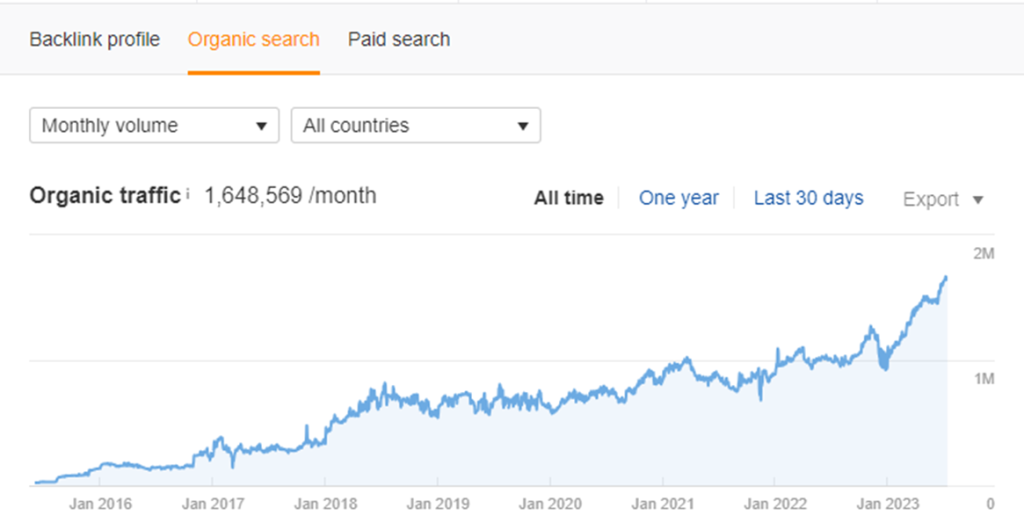
“It’s worth noting that when identifying relevant websites and blogs for link building, you should not just look at the site’s DR but also the site’s traffic trends. Using traffic data provided by Ahrefs, you can get a good idea of how well a site is currently performing. Generally, sites that have seen a natural increase in traffic would be of more value for link building than those that are declining in traffic.”
You can take a look at an example of a site performing well traffic-wise below:
Using Backlink Profiles to Uncover Natural Links
Backlink profiles can be a goldmine of potential link opportunities. They provide insights into the websites linking to your competitors and the types of links they have acquired. To find natural links, you need to:
- Analyse Backlink Profiles: Use a tool like Ahrefs to analyse backlink profiles. This will give you a clear picture of your competitors’ backlink landscape, including which websites are linking to them, what content is being linked to, and how those links were acquired.
- Identify Link Opportunities: After you’ve analysed profiles, you can identify potential link opportunities. These could be websites that frequently link to content similar to yours or websites that have linked to your competitors in the past. Look for patterns or trends in your competitors’ backlink profiles, such as common websites that link to them or specific types of content that attract more links.
A thorough analysis of backlink profiles can help you uncover natural links that can significantly enhance your link building campaign.
Another tip from Jacob:
“You can use Ahrefs’ link intersect tool to get a clear idea of exactly which sites are linking to your competitors. Entering up to 6 competitors at a time, using link intersect helps you identify the shortcomings of your link profile in comparison to your competitors. You’ll be returned a list of all the link opportunities, which can then be easily outreached with your personalised pitch. This is a great way to ensure that your link profile is not falling behind in the industry.”
Creating a List of Target Websites and Prioritising Them
When you’ve identified potential link opportunities, the next step is to create a list of target websites and prioritise them. To make the most of the list, you need to:
- Identify Potential Link Opportunities: Start by identifying potential link opportunities from your competitor analysis and your research on relevant websites and blogs.
- Perform a Backlink Audit: Conduct a backlink audit to assess the quality of these potential link opportunities. Consider factors like domain authority, relevance to your industry, and the website’s target audience. For instance, you might use a tool like Ahrefs to check the domain authority of each website and consider the website’s content and audience to determine its relevance to your industry.
- Prioritise Your List: Based on your audit, prioritise your list of target websites. Focus your efforts on the websites that offer the most valuable link opportunities. For example, you might prioritise a website with a high domain authority that has previously linked to content similar to yours.
By creating a ranked list of target websites, you can ensure that your link building efforts are focused and effective.
Are you ready to start your link building campaign, or need more guidance?
The team at UK Linkology is ready to help you take your online presence to the next level.
Get in touch with us today!
FAQs
To wrap up our guide to planning a great link building campaign, let’s address some common questions people often ask.
How Many Links Should You Build Per Month?
The number of links you should build per month depends on various factors, including the size of your website, your industry, and your SEO goals. However, it’s important to note that quality is more important than quantity. Building a few high-quality links from authoritative websites can be more beneficial than building a large number of low-quality links.
What are link building strategies?
Link building strategies are methods used to get other websites to link back to your website. Common strategies include content creation and promotion, guest blogging, broken link building, and influencer outreach. The goal of these strategies is to increase your website’s authority and improve its ranking in search engine results.
How do you plan a link building strategy?
Planning a link building strategy involves several steps. First, set clear goals for your campaign. Then, identify your target audience and ideal links. Research your competitors’ strategies and backlink profiles to gain insights and identify potential link opportunities. Finally, create high-quality, relevant content and promote it to attract links.
What are the three types of link building?
The three types of link building are natural, manual, and self-created links. Natural links are obtained without any direct action from you due to the natural usability of your content. Manual link building involves methods like asking for links or trading links. Self-created links are created by practices such as internal linking, adding a backlink in an online directory, forum, blog comment signature, or a press release with optimised anchor text.
What is a linking strategy?
A linking strategy is a plan you create to increase the number and quality of inbound links to a webpage with the goal of increasing the search engine rankings of that page or website. It involves identifying relevant, authoritative websites that could link back to your site and implementing strategies to earn these links.
